
In modern factories, gasket feeding must be simple and reliable. For this reason, many industries use vibratory feeder systems. At the center of these systems is the vibratory feeder controller. It controls how fast gaskets move. It also controls how smoothly they flow. As a result, production becomes stable and efficient.
This blog explains, in simple words, how a vibratory feeder controller works in a gasket feeder. It also explains why it is important for automation.
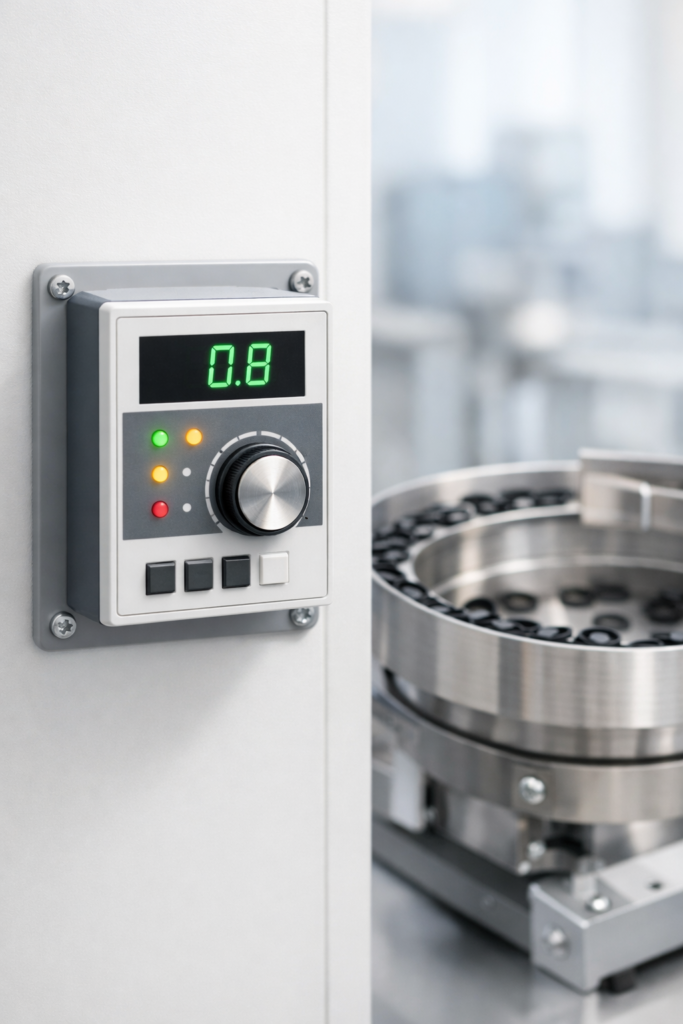
Vibratory Feeder Working Principles
A vibratory feeder works using vibration. When vibration starts, gaskets move forward. This happens because of friction between the gasket and the feeder surface. At the same time, the controller adjusts the vibration level. Because of this control, gaskets move smoothly. They do not jump, stick, or get damaged.
What Is a Vibratory Feeder?
A vibrating feeder is a device that moves parts using vibration. In gasket feeding, it separates gaskets from a bulk pile. Then it feeds them one by one. Therefore, vibrating feeders are useful in automation. They are easy to use. They also need very little maintenance.
How Vibratory Feeder Work
Vibrating feeders use an electric drive. When power is supplied, the drive creates vibration. As a result, gaskets move along the track. Meanwhile, the vibratory feeder controller controls the vibration strength. Because of this, the feeder runs at a steady speed. This protects soft gaskets from damage.
System Arrangement
A gasket feeder system has several parts:
- Vibrator bowl feeder
- Linear feeder track
- Vibratory feeder controller
- Sensors
- PLC or robot
Together, these parts work as one system. Therefore, the controller can stop feeding when needed. It can also restart feeding when required.
Generating Product Movement
The feeder moves gaskets using vibration. First, vertical motion lifts the gasket. Next, horizontal motion moves it forward. Because the controller controls vibration, gasket flow stays steady. As a result, the system avoids jams and double feeding.
Components of a Vibrator Feeder
A vibrator feeder system includes:
- Feeder bowl or track
- Drive unit
- Springs
- Sensors
- Vibratory feeder controller
Among these parts, the controller is very important. It controls speed and stability. Therefore, it affects the whole system.
Vibrator Feeder Control Systems
Feeder control systems manage vibration output. They control voltage and frequency. Because of this, they act as the brain of the feeder. In addition, many controllers support soft start and stop. As a result, machine wear reduces and life increases.
Vibrator Feeder Control Application
In gasket feeding, vibrator feeder controllers help in many ways. First, they feed gaskets one at a time. Second, they keep a steady flow. Moreover, controllers help with correct orientation. They also stop feeding when machines are full. Therefore, waste reduces. Furthermore, controllers connect easily with PLCs and robots. As a result, full automation becomes possible.
Variable Speed Control
Variable speed control is important for gasket feeders. Different gaskets behave differently. Therefore, operators adjust speed easily. As a result, gaskets move gently. In addition, the feeder matches the assembly speed.
Conclusion: Vibrator Feeder
A vibratory feeder controller is a key part of a gasket feeder. It controls vibration and ensures smooth feeding. As a result, manufacturers improve efficiency and quality. Therefore, choosing the right vibratory feeder controller helps create reliable automation systems.