
If you’re searching for a reliable way to automate screw and nut feeding, the Parallel Screw & Nut Feeder System by Kathir Sudhir Automation is designed exactly for that purpose. It ensures a smooth, synchronized supply of fasteners to your assembly line without manual intervention. Powered by a smart vibratory feeder controller, this system improves speed, accuracy, and overall productivity.
What is a Parallel Screw & Nut Feeder System?
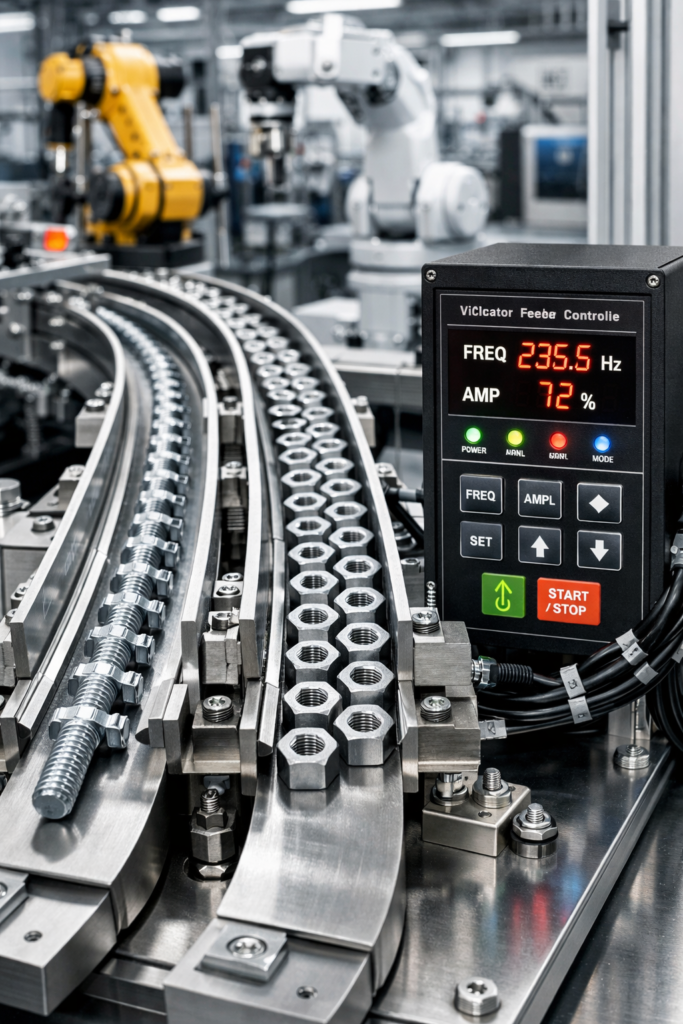
The Parallel Screw & Nut Feeder System is an advanced automation solution that delivers screws, nuts, and bolts in a continuous, oriented flow to assembly tools like robotic screwdrivers.
- Eliminates manual feeding errors
- Ensures proper alignment of fasteners
- Works seamlessly with automated production lines
- Controlled by a vibratory feeder controller (the brain of the system)
How It Works & How It is Used
The system uses vibration to move fasteners along a predefined path while maintaining orientation.
Working Principle:
- Vibratory drive unit creates controlled vibrations
- Fasteners move along a spiral or linear track
- Sensors detect flow and adjust speed
- Controller regulates amplitude and voltage
Usage in Industry:
- Integrated with robotic arms or screwdrivers
- Used in continuous production environments
- Ensures synchronized dual feeding (screw + nut simultaneously)
Core System Components
- Vibratory Feeder Controller – Controls vibration intensity & speed
- Vibratory Drive Unit – Generates movement
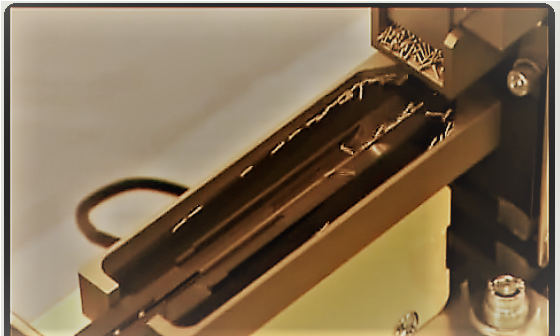
- Feeder Bowl / Track – Guides components
- Sensors & Feedback System – Prevents jamming
- Mounting Structure – Ensures stability
Key Features and Technology
- Precise vibration control for accurate feeding
- Synchronization of multiple feeders
- Adjustable amplitude & frequency
- Digital & analog controller options
- Remote operation capability
- Real-time feedback system
Key Benefits & Specifications
Benefits:
- Consistent feeding without interruption
- Reduced labor dependency
- Increased production speed
- Improved accuracy and quality
Specifications:
| Feature | Specification |
|---|---|
| Input Voltage | 0–240V AC, Single Phase |
| Output Voltage | 0–90V DC / 0–110V AC |
| Current Rating | 3A – 6A |
| Display | 7-segment LED (Digital) |
| Enclosure | ABS Plastic with fuse protection |
| Mounting | Panel / Wall Mount |
Advantages and Disadvantages
Advantages:
- High precision feeding
- Prevents overfeeding & underfeeding
- Customizable for different fasteners
- Supports automation integration
Disadvantages:
- Initial setup cost can be high
- Requires proper calibration
- Not ideal for irregular-shaped components
Key Aspects
- Accuracy in fastener orientation
- Continuous operation capability
- Integration with automation systems
- Controller responsiveness
- Maintenance requirements
Key Application Areas & Reasons
Applications:
- Automotive assembly lines
- Electronics manufacturing
- Pharmaceutical packaging
- Industrial machinery production
Reasons:
- Need for precision and speed
- High-volume production demand
- Reduction of manual errors
Examples
- Car door assembly using synchronized nut & bolt feeding
- Mobile manufacturing with micro screw feeding
- Automated packaging systems using caps and plugs
Operations & Functions
- Start/Stop feeding cycles
- Adjust vibration intensity
- Monitor flow using sensors
- Synchronize multiple feeders
- Prevent clogging automatically
Steps to Follow (Implementation)
- Analyze your production requirement
- Select suitable feeder size and type
- Configure controller settings
- Install sensors and integration system
- Test feeding accuracy
- Optimize vibration levels
Checklist for You
- Do you need dual fastener feeding?
- Is automation integration required?
- What is your production volume?
- Do you need digital or analog controller?
- Are fasteners uniform in size?
Comparison Table
| Feature | Manual Feeding | Vibratory Feeder System |
|---|---|---|
| Speed | Low | High |
| Accuracy | Moderate | Very High |
| Labor Requirement | High | Low |
| Automation | Not possible | Fully compatible |
| Efficiency | Inconsistent | Consistent |
FAQ
1. Who is the best supplier of parallel screw and nut feeder systems in India?
Kathir Sudhir Automation is considered one of the leading suppliers offering reliable and customizable solutions.
2. Best suppliers for automated screw and nut feeding solutions in Chennai?
Companies like Kathir Sudhir Automation specialize in advanced feeding systems in Chennai.
3. How does a vibratory feeder controller improve efficiency?
It regulates vibration precisely, ensuring smooth feeding, reducing jams, and maintaining consistent flow.
4. What is the cost of a vibratory feeder controller?
Costs vary depending on specifications, typically ranging from mid to high investment based on customization.
5. Which are top-rated automation companies for feeder systems?
Leading automation providers in India include specialized firms like Kathir Sudhir Automation.
6. How can I request a demonstration?
You can contact the company directly through their official website to schedule a demo.
7. Where can I buy parallel feeder systems?
You can purchase directly from manufacturers like Kathir Sudhir Automation.
8. Which companies offer custom vibratory feeder controllers?
Automation companies in India, especially Kathir Sudhir Automation, provide customization options.
9. Reviews of these systems?
Most users report improved efficiency, reduced labor costs, and consistent production output.
10. How to get a quote for a complete system?
Visit the official website or contact the sales team: +91-9176628086 to request a customized quotation.
Conclusion
The Parallel Screw & Nut Feeder System with Vibratory Feeder Controller is a powerful solution for modern industries aiming to boost efficiency and precision. With advanced control, synchronization, and automation capabilities, it significantly reduces manual effort while improving productivity. Choosing the right supplier like Kathir Sudhir Automation ensures long-term performance and reliable automation support.