
Dust is one of the biggest challenges in industries such as mining, construction, cement, agriculture, and bulk material handling. Excessive dust not only reduces air quality but also creates health hazards, damages equipment, and lowers overall productivity. To tackle these issues, dust suppression systems are widely used. Today, with the rise of automation, electric linear actuators are becoming the preferred solution to control and optimize these systems.
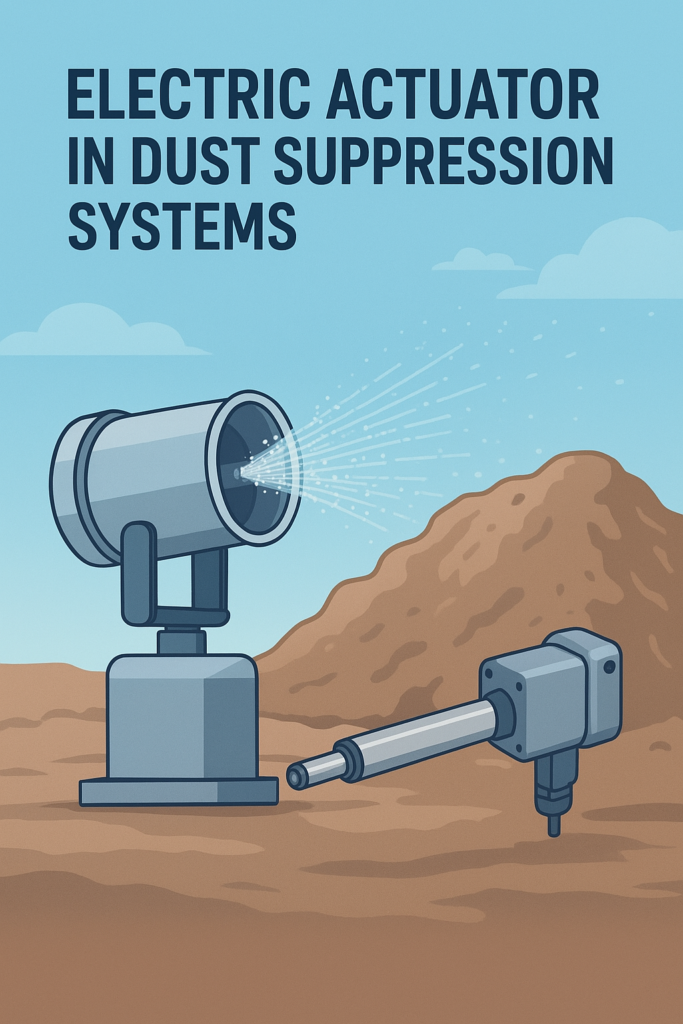
Why Dust Suppression Systems Need Automation
Traditional dust suppression systems rely on manual valves or hydraulic/pneumatic setups to control nozzles, sprayers, and ventilation. These methods are often inefficient, energy-consuming, and require high maintenance. By integrating electric linear actuators, companies can achieve:
- Precise control over nozzle positioning and spray intensity.
- Automated adjustments based on dust concentration levels.
- Energy efficiency by eliminating compressed air or hydraulic fluids.
- Reduced downtime with low-maintenance, reliable actuators.
Role of Electric Linear Actuators
Electric actuators convert electrical energy into linear motion, making them ideal for applications where precise, repeatable movements are required. In dust suppression systems, they can be used to:
- Adjust spray nozzles to target high-dust areas.
- Control dampers in ventilation ducts.
- Automate water spray arms on conveyors.
- Enable remote or sensor-based operation for unmanned systems.
Benefits of Electric Actuator Integration
- Accuracy and Control – Operators can fine-tune actuator movements for effective dust management.
- Sustainability – Fully electric, no oil leaks or compressed air waste.
- Easy Integration – Compatible with PLCs, IoT, and smart control systems.
- Durability – Designed to withstand harsh environments like mining sites.
- Cost Efficiency – Lower running costs compared to hydraulics or pneumatics.
Real-World Applications
- Mining – Keeping haul roads and crushing plants dust-free.
- Cement Plants – Managing dust at conveyor transfer points.
- Agriculture – Controlling dust during grain handling.
- Construction Sites – Reducing dust pollution for worker safety.
Conclusion
Integrating electric linear actuators into dust suppression systems transforms traditional setups into automated, efficient, and eco-friendly solutions. With precise control, reduced maintenance, and smart adaptability, actuators are paving the way for cleaner, safer, and more sustainable industrial environments.
Easy to navigate and seems legit.