
Blog & Resources
Door Open/Close Alert System in Indigenisation: Enhancing Security and Efficiency
In the ever-evolving landscape of security systems, door open/close alert system have emerged as a crucial component for ensuring the...

Actuator Meaning: Unleashing the Empowering Magic of Motion Control
In the world of engineering and automation, the term "actuator" holds immense significance. From robotics and aerospace to industrial...

Improving Precision in Agriculture: Exploring the Digital Plough Inclinometer
Precision farming has revolutionized the agricultural industry, offering farmers more accurate and efficient methods for maximizing...

Revolutionary Bespoke Valve Controller: An Exemplar of Unparalleled Customization
In industrial settings, valves play a crucial role in controlling the flow of various fluids such as water, oil, gas, and chemicals....

Empower Customer Engagement through a Bespoke Event-Driven Alert System
In today's fast-paced world, where information travels at lightning speed, businesses need to stay connected with their customers and...

Empowering Performance and Reliability of power failure alert system
In today's technology-driven world, a reliable and uninterrupted power supply is crucial for the smooth functioning of various...

Indigenized Controllers for Feeder Applications
In the realm of modern technology, control systems play a crucial role in regulating and monitoring various industrial processes....

Ultimate Angle Gauge: Unrivalled Precision with Clinometer
Introduction In the world of engineering, construction, and surveying, accurate angle measurements play a crucial role. From...
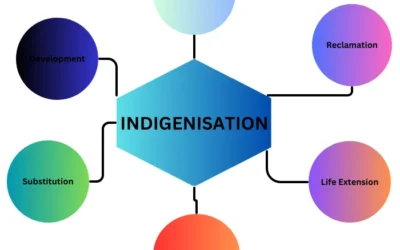
Indigenisation in India: National Pride and Empowerment
Discover the meaning and importance of indigenisation in India, including its positive impact on economic development and self-sufficiency.
Frequently Asked Questions & Popular Topics
What is indigenisation?
Indigenisation refers to a process in which a country’s economy is transferred from foreign control to local control. This often involves increasing the participation of indigenous people in the ownership and management of businesses and industries.
Why is indigenisation important?
Indigenisation is important because it can promote economic growth and development by ensuring that resources and wealth are more evenly distributed within a country. It can also help to reduce reliance on foreign investment and create opportunities for local entrepreneurs.
What are the challenges of indigenisation?
The challenges of indigenisation can include resistance from foreign investors and business owners, lack of local expertise and capital, and potential conflicts over land and resources. Additionally, it can be difficult to balance the interests of different stakeholders and ensure that the process is equitable and inclusive.
What are some examples of indigenisation policies?
Some examples of indigenisation policies include Zimbabwe’s Indigenisation and Economic Empowerment Act, which requires foreign-owned companies to cede at least 51% of their shares to local investors; Malaysia’s New Economic Policy, which aims to promote the economic participation of ethnic Malays; and Canada’s Aboriginal Procurement Initiative, which seeks to increase procurement from Indigenous-owned businesses.
How can indigenisation be implemented effectively?
Indigenisation can be implemented effectively through careful planning, consultation with stakeholders, and a focus on building local capacity and expertise. It is also important to ensure that the process is transparent, inclusive, and equitable, and that the interests of all stakeholders are taken into account.