
In modern warehouses, logistics hubs, and manufacturing facilities, material handling efficiency directly impacts overall profitability. Loading docks serve as the primary bridge between warehouses and incoming transport vehicles. However, bed heights vary significantly across container trucks, trailers, and delivery vans.
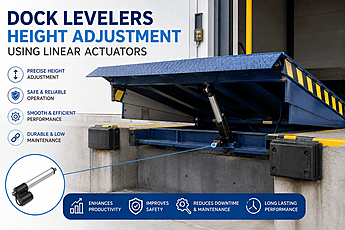
Heavy-duty electric linear actuators integrated with smart motor controllers solve this challenge by providing precise, smooth, and automated dock leveler height adjustments. This comprehensive guide explains how linear actuator setups work, their key features, specifications, advantages, and how to choose the ideal system for your facility.
Overview of Linear Actuators in Dock Levelers
An electric linear actuator converts rotary motion into clean, powerful linear force. In automated dock levelers, actuators replace cumbersome manual levers or high-maintenance hydraulics to elevate the dock deck and deploy the bridge lip cleanly onto the truck bed.
For heavy industrial dock applications, the drive setup must provide:
- High static and dynamic load capacities
- Smooth, jerk-free height positioning
- Reliable weatherproof operation
- Protection against mechanical overloads and structural jams
- Sensor integration for automated positioning and safety interlocking
These electro-mechanical systems are widely used in:
- Cold storage distribution centers
- E-commerce fulfillment hubs
- Pharmaceutical loading bays
- Industrial manufacturing facilities
- Automated logistics terminals
Why Dock Levelers Demand Precision Motion Control
Loading docks host heavy rolling machinery such as forklifts, electric reach trucks, and pallet jacks. A height discrepancy of even a few centimeters between the dock ramp and the vehicle bed creates serious hazards.
An uncalibrated or failing adjustment system often leads to:
- Forklift Accidents: Unstable ramp transitions can tip machinery or injure drivers.
- Structural Equipment Wear: Repeated impacts cause severe damage to forklift wheels, axle bearings, and leveler hinges.
- Product Damage: Fragile goods suffer cracks or breakage due to harsh, jarring bumps.
- High Maintenance Downtime: Hydraulic oil leaks, seal degradation, and line pressure losses stall operations.
A high-performance linear actuator system paired with a smart drive controller eliminates these issues through accurate position, current, and speed regulation.
Key Features of Linear Actuator Controllers for Dock Levelers
1. High-Current Output & Variable Speed Control
Adjustable speed control allows operators to fine-tune elevation and extension speeds depending on:
- Ramp weight and length
- Payload conditions
- Cycle speed requirements
- Actuator motor torque limits
2. Soft Start and Soft Stop Technology
Gradually ramps up and decelerates movement at start and end points. This critical feature:
- Protects the structural frame and mounting pins from shock loads
- Prevents sudden mechanical jolts
- Significantly extends the operating lifespan of the linear actuator
3. Overcurrent and Obstacle Protection
Automatically monitors motor current draw. If an obstacle blocks the ramp or an overload occurs, the controller instantaneously halts the actuator to prevent motor burnout and structural bending.
4. Integrated Safety Sensor Support
Supports direct integration with external safety hardware, such as:
- Limit switches (preventing over-extension)
- Hall-effect / Potentiometer feedback (enabling precise height memory)
- Emergency stop switches
- Vehicle proximity sensors (ensuring the truck is fully backed in before operating)
How Linear Actuator Height Adjustment Works
The complete operation involves two synchronized mechanical steps driven by the main power module.
Working Process
- Power Supply Input: Mains AC power enters the main drive controller unit.
- Signal Trigger: The operator presses the elevation button on the wall panel or remote.
- Primary Actuator Drive: The controller supplies regulated DC power to the main heavy-duty linear actuator, lifting the main dock platform above trailer height.
- Secondary Lip Extension: A smaller auxiliary actuator (or mechanical latching mechanism) extends the hinged lip forward.
- Controlled Lowering: The controller smoothly lowers the extended lip onto the trailer floor until full contact is detected.
- Float Mode Activation: During loading, the controller allows the actuator to accommodate vehicle suspension movement as weight changes inside the truck.
Comparison Table: Hydraulic Systems vs. Electric Linear Actuators
| Feature | Hydraulic Leveler System | Electric Linear Actuator System |
| Maintenance Needs | High (Fluid changes, hose wear, valve leaks) | Very Low (Sealed units, zero fluid leaks) |
| Environmental Cleanliness | Risk of oil contamination in food/pharma bays | Clean, eco-friendly electric operation |
| Temperature Resistance | Oil thickens in cold, causing sluggish movement | Consistent performance in extreme cold/heat |
| Positional Precision | Moderate (Relies on pressure valves) | High (Precision digital position control) |
| Energy Efficiency | High power consumption to hold pressure | Power drawn only when actively moving |
| Installation Setup | Complex piping, pumps, and fluid reservoirs | Modular wiring and compact mounting |
Top Controller Configurations for Dock Levelers
Dual-Channel Synchronized Actuator Controllers
- Best Suitable For: Heavy-duty wide levelers requiring dual synchronized actuators to prevent frame twisting.
IP66 Industrial Enclosure Controllers
- Key Benefits: Dustproof and hose-down water resistant; engineered for exterior dock environments subject to rain and washdowns.
Custom Motion Controllers from Indigenisation
- Tailored For: Seamless integration with automated facility management systems, high-duty cycles, and custom safety interlocks.
Key Specifications to Consider
| Specification | Recommended Typical Value |
| Input Voltage | 110V / 230V AC or 24V DC Industrial |
| Actuator Output Voltage | 12V / 24V / 36V DC High Torque |
| Rated Output Current | 10A – 30A Continuous (Peak 40A+) |
| Enclosure Rating | IP65 or IP66 Minimum |
| Duty Cycle Rating | 20% – 50% Heavy Duty |
| Feedback Support | Potentiometer / Hall Effect / Reed Switch |
| Protection Modes | Thermal Overload, Overcurrent, Short Circuit |
Required Components in an Automated Dock Setup
A complete electric dock leveler drive system comprises:
- Heavy-duty primary lift linear actuator (4000N – 10000N+ thrust)
- Lip extension actuator/solenoid
- Central actuator motion controller module
- Wall-mounted pendant or button interface
- Limit switches / Position feedback encoders
- Master power supply unit with battery backup option
Key Application Areas
E-Commerce & Warehouse Distribution
- High-speed continuous loading cycles
- Precise matching for varied delivery vehicles
Pharmaceutical & Food Processing Plants
- Strictly zero-oil environments preventing food contamination
- Cleanroom-compatible dock operations
Cold Storage Facilities
- Sub-zero operation without freezing fluid lines
- Fast operation to minimize loss of refrigerated air
Advantages of Electric Linear Actuator Control
Operational Benefits
- Precise, smooth height adjustment
- Reduced mechanical vibration and noise
- Instant stop and emergency hold capability
- Extended component service life
- Low power consumption
Business Advantages
- Zero risk of hydraulic fluid spill compliance fines
- Lower long-term total cost of ownership (TCO)
- Faster loading dock turn-around times
- Enhanced safety ratings for dock personnel
Disadvantages to Consider
- Higher initial hardware cost compared to simple mechanical spring levelers
- Requires accurate sizing calculations for max dynamic truck loads
- Advanced feedback setups require trained technician setup
Purchase Guide: Choosing the Right Controller Setup
Step 1: Calculate Total Weight & Thrust Requirements
Determine the dead weight of the steel ramp deck plus maximum expected shock loading to size the actuator thrust capacity properly.
Step 2: Match Voltage and Current Specs
Select a controller capable of handling the actuator motor’s full stall current without tripping prematurely.
Step 3: Select Required IP Protection Level
External bays require at least IP65/IP66 enclosures to protect control electronics from heavy rain, snow, and dust ingress.
Step 4: Verify Safety Interlock Inputs
Ensure your controller can interface with exterior dock traffic lights, door sensors, and emergency stop switches.
Checklist Before Buying
Your System Should Have:
- Heavy-duty metal/IP-rated enclosure
- High peak current allowance for motor startup
- Adjustable current limiting (overload protection)
- Soft start and soft stop programming
- Dedicated limit switch inputs
Avoid Controllers Without:
- Overcurrent sensing capabilities
- Adequate thermal heatsinking
- Reverse polarity protection
Key Prevention & Maintenance Techniques
- Prevent Mechanical Binding: Periodically lubricate dock leveler hinges and actuator mounting clevis pins.
Conclusion
Upgrading to heavy-duty electric linear actuators backed by intelligent motion control transforms traditional loading docks into safe, clean, and highly efficient logistics hubs. Eliminating hydraulic fluid leaks while gaining digital precision improves operational throughput and minimizes facility maintenance costs over the long run.
FAQs
1. Why are linear actuators replacing hydraulic cylinders in dock levelers?
Electric linear actuators eliminate oil leak hazards, perform reliably in sub-zero cold storage environments, consume power only when moving, and require significantly less maintenance than hydraulic setups.
2. What IP rating is recommended for dock leveler linear actuators and controllers?
An IP65 or IP66 rating is strongly recommended to protect internal electronics and gearboxes from rain, washdowns, dust, and outdoor weather exposure.
3. Can linear actuators handle the weight of a forklift driving over the dock?
Yes. When fully deployed or recessed, the mechanical deck rests on structural steel stop blocks or mechanical locks. The actuator handles the dynamic weight during the height adjustment phase, while static loads are transferred to the dock frame.
4. How does the soft start/stop function protect dock levelers?
Soft start/stop gradually ramps motor speed, preventing sudden mechanical shocks to the frame hinges, mounting pins, and gearbox gears when starting or stopping movement.
5. Where can I source industrial linear actuator controllers for custom dock automation in India?
Industrial motion controllers and automation systems can be sourced through specialized industrial automation providers such as Indigenisation.